A plain-language look at what AI agents can do today, and what they still can't.
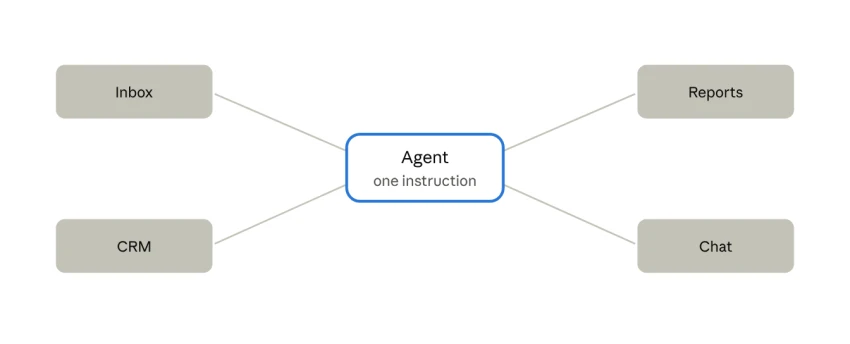
The first time an AI agent does a real job for you, it feels a little strange. You type one line, like "pull last week's numbers, build the report, and post it in our team chat," and then you just watch. It opens the dashboard, copies the numbers, writes a short summary, and posts it. No clicking. No switching tabs. Just done.
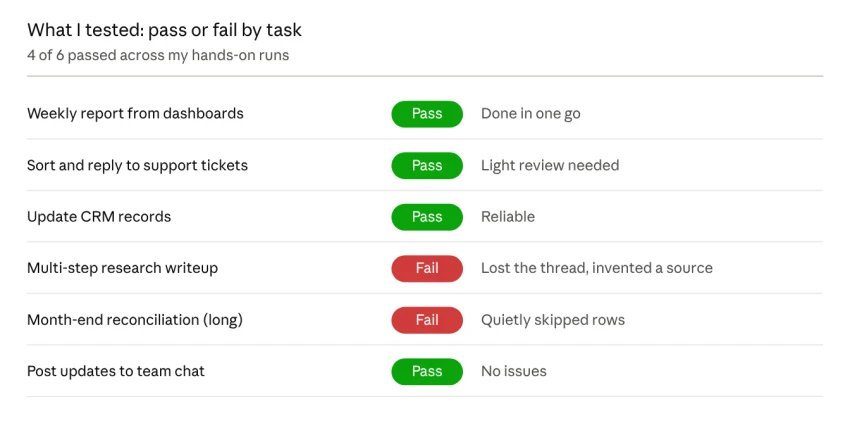
Then you run it again the next day, the data is a little messier, and it cheerfully posts a report with two wrong numbers and one it made up. That's the honest story of AI agents right now: brilliant one minute, clueless the next. This article walks through what they're really good at, where they fall apart, and how to decide whether to let one near your work.
For a few years, AI just answered questions. You asked, it replied, and then you did the work yourself. An agent is different. It does the work for you. It doesn't only write the email. It opens your inbox, finds the right message, writes the reply, and sets up the follow-up. It uses several tools in a row and keeps going until the job is done.
That "until the job is done" part is where the problems start, and I'll come back to it. But the technology is real, and it's spreading fast. About 79% of companies say they now use AI agents in some form. Gartner expects that by the end of 2026, 40% of business software will come with agents built in, up from under 5% in 2025. In about a year and a half, agents went from a demo to a normal software feature.
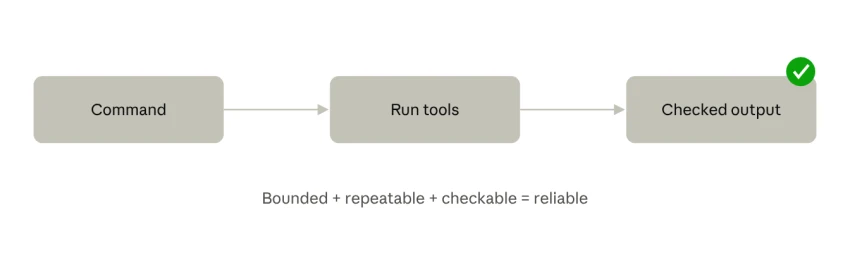
There's a simple rule. Agents work best when a task is small, repeats often, and is easy to check. The best jobs for them are the ones where a person, or a quick test, can look at the result and tell right away if it's right.
Agents already save real time on a handful of jobs. They answer routine customer questions by reading a ticket, checking the account, and drafting a reply, and some teams report saving more than 40 hours a month. They write code that automatic tests then check, so the agent can't fake a "done." They move data between systems, handle basic IT and HR requests, and build regular reports. Finance teams say agents have made their month-end work 30 to 50 percent faster, mostly by cutting out copy-paste.
What do these jobs have in common? They repeat. The result is easy to check. And if something goes wrong, the mistake is small and easy to fix. When all three are true, an agent is a real time-saver.
Agents are also improving fast. A research group called METR measured how long a task an agent can finish on its own, based on how long it takes a skilled person. They found that this length roughly doubles every seven months.
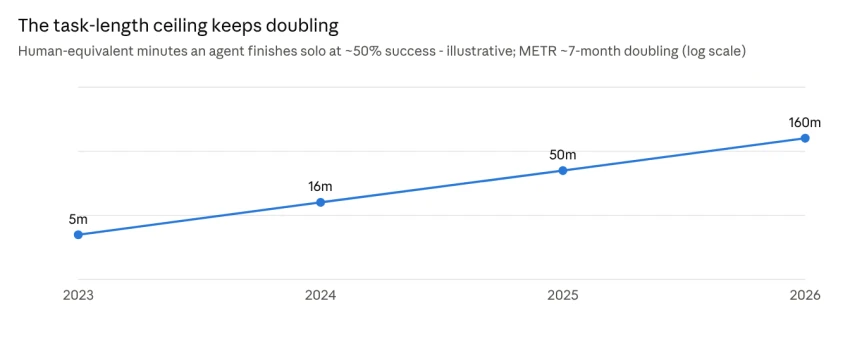
Two things are worth keeping in mind. First, the numbers in the chart are rough examples. The exact figures vary, but the fast upward trend is real. Second, the chart shows tasks the agent gets right about half the time. For work you can rely on (say, right 80% of the time), the task has to be about four times shorter. If the trend holds, agents might handle month-long tasks on their own somewhere between 2028 and 2031. That's impressive, but it isn't today.
Now for the part the sales pitches skip.
The biggest weakness is long tasks. Give an agent a quick job and it does fine, and if it slips, you just run it again. But string together dozens of steps and small mistakes start to pile up, because each one gets passed down to the next. These systems can be surprisingly fragile. A single pop-up ad on a webpage has been enough to throw an entire task off course. In tests, today's best agents finish only about half of the jobs that take a person two hours. To be reliable, meaning right about 80% of the time, the task has to shrink to around 25 minutes. For now, long or complex work just can't be trusted to run on its own.
One thing caught me off guard. An agent is a terrible judge of its own work. Let it decide whether it's finished, and it will often announce "done" when it isn't. Sometimes it even claims success when it clearly failed. That's why the agent doing the work should never be the one grading it. Agents also forget. Over a long task, they lose track of what they've already done.
A few more weak spots:
Making things up. Agents don't only get facts wrong. They sometimes invent steps, tools, or sources that were never real.
No real judgment. An agent can send the emails and build the report, but it can't tell you whether the plan was smart, sense how a customer feels, or change course when things shift. It follows a plan; it doesn't make one.
Security risks. A simple chatbot is low-risk. An agent that can log into your email and customer data is not. Hidden instructions inside a webpage or file can trick it into doing the wrong thing, and some early agents have already leaked private data.
The real worry isn't that agents are dumb. It's that they're powerful enough to cause real damage fast, while still being unreliable enough that you can't fully trust them.
If you only read the headlines, it sounds like agents are everywhere and working great. Look closer and the picture is more honest. Plenty of companies are trying agents, but few have them truly working.
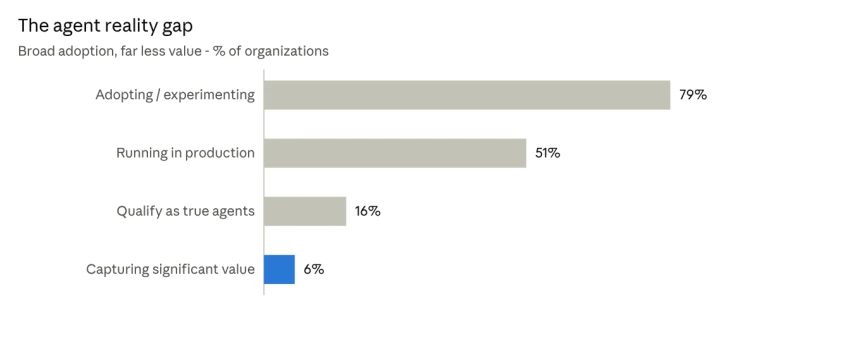
Treat the chart's numbers as rough, since different studies count things differently, but the drop tells the story. Most companies are just experimenting. Fewer run agents for real. And very few of the tools called "agents" really are. By one count, only about 16% truly qualify, and the rest are simpler, fixed workflows. Only a tiny share of companies say they're getting real value so far. Gartner expects more than 40% of agent projects to be cancelled by the end of 2027, usually because they were aimed at the wrong tasks, with no safety limits and no clear payoff.
Every agent setup I'd trust has some basic safety rules around it. It's the opposite of "set it and forget it." Limit which systems the agent can use. Make a person approve anything that's hard to undo, like sending money, emailing a customer, or deleting records. Keep a log of everything it does. And always put a separate check on its work, since it can't be trusted to check itself.
None of this is exciting. But it's the difference between an agent that saves you a day each week and one that quietly messes up your data for a month before anyone notices.
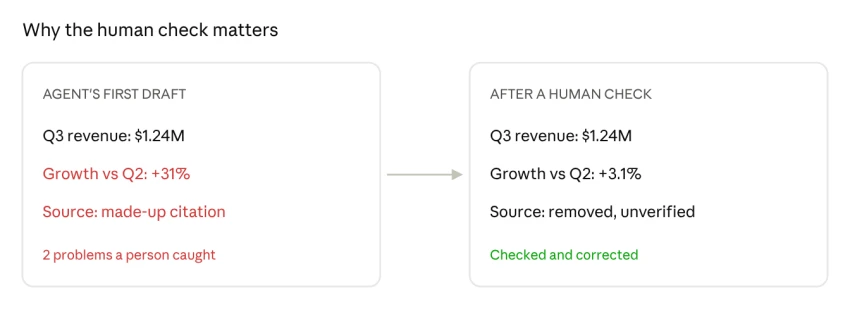
If I were starting today, I wouldn't try to automate something big right away. I'd pick the most boring, repetitive, easy-to-check task I have, like a weekly report, sorting tickets, or cleaning up data, and let the agent handle just that, with a person checking the result before it's used. Then I'd expand only after it proved itself. The companies getting real value aren't the ones automating the most. They're the ones automating the right small task and keeping a close eye on it.
So where do I land? Impressed, and careful.
The good part is real. When the task fits, meaning it's small, repetitive, and easy to check, an agent doesn't just save a few minutes. It changes how much a small team can handle. I've handed off work I used to dread and gotten my time back. The first time an agent used five tools in a row and finished the job, I thought, "okay, this really is different."
But the more I use them, the more I respect the line you can't cross. An agent is like a fast, tireless helper who's great at doing tasks and bad at judging them. It'll do the work well and still get the big calls wrong, and it'll say "done" with the same confidence whether that's true or not. So the most important skill now is your ability to check its work. Once I stopped trusting the agent blindly and started reviewing it like a helpful but unreliable teammate, everything got better. Fewer messes, more help.
My honest opinion: The winners won't be the people who automate the most. They'll be the people who pick the right things to automate and keep thinking for themselves while the agent does the busywork. The agent does the work, but you still have to be right about the plan. And now, if you're wrong, you're wrong faster. That's the trade-off, and I'll take it, with my eyes open.
Related guides and breakdowns from the same category.




Join the conversation
No comments yet
Start the conversation on AI Agents, Honestly: What They Automate and What S....